Introduction
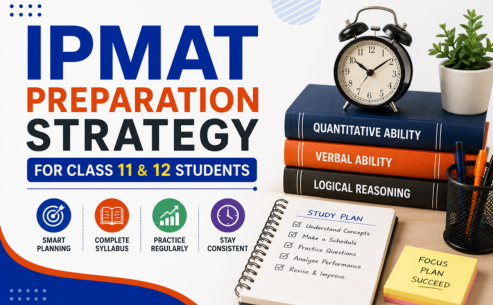
The IPMAT 2029 Preparation Strategy should begin much earlier than most students think. Since the Integrated Programme in Management Aptitude Test (IPMAT) is one of the most competitive undergraduate management entrance exams in India, students who start preparing in Class 11 gain a significant advantage. A well-structured IPMAT preparation plan helps build strong fundamentals in Quantitative Ability, Verbal Ability, and Logical Reasoning while balancing school academics.
Whether you are looking for an effective IPMAT Class 11 Preparation roadmap or an advanced IPMAT Class 12 Strategy, early planning, consistent practice, and regular mock tests can significantly improve your chances of securing admission to a top IPM program.
Why Class 11 is the Best Time to Start IPMAT Preparation
One of the biggest advantages of following an IPMAT 2029 Preparation Strategy from Class 11 is the availability of time. Students who start early can focus on understanding concepts rather than rushing through topics close to the exam. According to expert recommendations, Class 11 students can gradually complete the IPMAT syllabus while maintaining their school studies.
Benefits of Starting in Class 11
| Benefit | Impact on Preparation |
| More Preparation Time | Better conceptual clarity |
| Regular Practice | Improved speed and accuracy |
| Early Mock Tests | Strong exam temperament |
| Balanced Learning | Less pressure in Class 12 |
An effective IPMAT Class 11 Preparation approach allows students to strengthen Quantitative Ability, build reading habits, and develop vocabulary over time. This long-term IPMAT preparation plan also leaves sufficient time for revision and mock-test analysis before the actual exam.
Understanding the IPMAT Syllabus & Exam Requirements
Before implementing an IPMAT 2029 Preparation Strategy, students must understand what the exam actually tests. A clear understanding of the syllabus helps in creating an effective IPMAT preparation plan and ensures that no important topic is overlooked.
IPMAT Syllabus Overview
| Section | Important Topics |
| Quantitative Ability | Arithmetic, Algebra, Number System, Geometry, Mensuration, Data Interpretation |
| Verbal Ability | Reading Comprehension, Vocabulary, Grammar, Para Jumbles, Sentence Correction |
| Logical Reasoning* | Arrangements, Blood Relations, Syllogisms, Critical Reasoning, Venn Diagrams |
Logical Reasoning is particularly important for exams like IPMAT Rohtak and other BBA entrance tests.
For successful IPMAT Class 11 Preparation and IPMAT Class 12 Strategy, students should prioritize conceptual understanding over memorization. Since IPMAT primarily tests fundamentals, consistent practice and regular revision remain the most effective preparation methods.
IPMAT Class 11 Preparation Strategy: Building Strong Foundations
A successful IPMAT 2029 Preparation Strategy begins with building strong fundamentals during Class 11. This phase should focus on concept clarity, regular practice, and developing habits that will support long-term preparation. Students who follow a structured IPMAT Class 11 Preparation plan are better equipped to handle advanced concepts and intensive mock-test practice in Class 12.
Recommended Daily Study Schedule
| Activity | Time Allocation |
| Quantitative Ability | 1.5 Hours |
| Newspaper Reading | 45 Minutes |
| Grammar & Vocabulary Practice | 45 Minutes |
Weekly Preparation Plan
| Day | Focus Area |
| Monday–Friday | 1–2 Quant Topics & Practice |
| Alternate Weeks | Logical Reasoning Topics |
| Sunday | Sectional Tests & Previous Year Questions |
Students should focus on Arithmetic, Algebra, Number System, and Geometry while simultaneously improving vocabulary through newspaper reading and grammar exercises. Maintaining a vocabulary notebook and revising formulas regularly can significantly improve retention. Weekly sectional tests help identify strengths and weaknesses, allowing students to adjust their IPMAT preparation plan accordingly.
By the beginning of Class 12, students following this IPMAT Class 11 Preparation approach can complete most of the syllabus and shift their focus toward revision, mocks, and performance improvement.
IPMAT Class 12 Strategy: Turning Preparation into Performance
As students enter Class 12, the focus of the IPMAT 2029 Preparation Strategy shifts from learning concepts to maximizing performance. At this stage, the syllabus should largely be familiar, allowing students to dedicate more time to revision, practice, and mock tests. A well-planned IPMAT Class 12 Strategy helps balance board examinations and entrance exam preparation effectively.
Weekly Preparation Framework
| Day | Focus Area |
| Monday–Friday | Topic-wise Practice (Quant, Verbal, LR) |
| Saturday | Full-Length Mock Test |
| Sunday | Mock Analysis & Revision |
Students should allocate 75–90 minutes daily to practice Quantitative Ability, Verbal Ability, or Logical Reasoning topics on a rotational basis. Equally important is maintaining a record of strengths and weaknesses. This helps prioritize weaker areas during the final preparation phase.
Key Focus Areas in Class 12
- Regular revision of formulas and concepts
- Weekly mock tests and performance tracking
- Reading newspapers for Verbal Ability improvement
- Previous-year question practice
- Time management and accuracy enhancement
An effective IPMAT Class 12 Strategy is not just about taking mocks but analysing them thoroughly. Identifying mistakes, revisiting difficult questions, and improving weak topics are essential parts of a successful IPMAT preparation plan and can significantly boost final exam
90-Day IPMAT Preparation Plan Before the Exam
The final three months are crucial in any IPMAT 2029 Preparation Strategy. During this period, students should focus on revision, mock tests, and strengthening weak areas rather than learning entirely new concepts. A structured IPMAT preparation plan can help maximize scores and improve exam-day confidence.
90-Day Preparation Roadmap
| Phase | Focus Area |
| First 30 Days | Complete weak topics and revise formulas |
| Next 30 Days | Solve sectional tests and previous-year questions |
| Final 30 Days | Full-length mocks, analysis, and revision |
During the last month, students should attempt a mock test every 2–3 days and spend equal time analysing performance. Daily Reading Comprehension practice, vocabulary revision, formula review, and targeted work on weak sections are essential. This focused IPMAT preparation plan helps improve accuracy, speed, and overall exam readiness.
Common Mistakes IPMAT Aspirants Should Avoid
Even the best IPMAT 2029 Preparation Strategy can fail if students make avoidable mistakes during their preparation journey. Many aspirants focus heavily on one section while neglecting others, which can affect their overall score.
Common Mistakes to Avoid
- Starting preparation too late
- Ignoring Verbal Ability and Reading Comprehension
- Taking mock tests without analysing mistakes
- Studying without a structured IPMAT preparation plan
- Focusing only on strong subjects
- Neglecting formula revision and practice
Students following a balanced IPMAT Class 11 Preparation and IPMAT Class 12 Strategy are more likely to achieve consistent improvement and better exam results.
How Tarkashastra Helps Students Prepare for IPMAT 2029
A well-planned IPMAT 2029 Preparation Strategy requires more than just self-study—it demands expert guidance, regular assessment, and a structured learning environment. This is where Tarkashastra supports students throughout their preparation journey.
At Tarkashastra, students receive a comprehensive IPMAT preparation plan designed specifically for Class 11 and Class 12 aspirants. The program includes daily live interactive classes, topic-wise concept building, sectional tests, and full-length mock examinations that mirror actual exam conditions.
What Students Get at Tarkashastra
| Feature | Benefit |
| Live Interactive Sessions | Strong conceptual understanding |
| Topic-Wise Tests | Continuous progress tracking |
| Full-Length Mocks | Exam readiness and confidence |
| AI-Based Performance Analysis | Personalized improvement insights |
| Mentorship Support | Strategic guidance and doubt-solving |
Whether you are beginning your IPMAT Class 11 Preparation or refining your IPMAT Class 12 Strategy, Tarkashastra helps transform consistent effort into measurable results.
Conclusion
The ideal IPMAT 2029 Preparation Strategy combines early preparation, consistent practice, mock-test analysis, and smart planning. Start in Class 11, stay disciplined, and follow a structured roadmap to maximize your chances of IPMAT success.
FAQs
1. Should I start preparing for IPMAT in Class 11?
Yes, Class 11 is considered the ideal time to begin IPMAT preparation. Starting early gives you enough time to build strong fundamentals in Quantitative Ability and Verbal Ability, develop reading habits, and take regular mock tests without the pressure of board examinations.
2. How can Class 12 students balance boards and IPMAT?
Class 12 students should follow a structured timetable that allocates time to both board studies and IPMAT preparation. Focus on school academics during weekdays while dedicating time to topic-wise practice, mock tests, and revision on weekends. Since many IPMAT topics overlap with school mathematics, preparation can often complement board studies.
3. Which topics should be covered early in IPMAT preparation?
Students should begin with core Quantitative Ability topics such as Arithmetic, Algebra, Number System, Percentages, Profit & Loss, Time & Work, and Geometry. In Verbal Ability, developing vocabulary, grammar skills, and reading comprehension habits should start as early as possible.
4. How many hours should students study for IPMAT?
Class 11 students can start with around 2–3 hours of focused preparation daily, while Class 12 students may allocate 2–4 hours depending on their school schedule. The key is consistency rather than studying for long hours occasionally.
5. What books are recommended for IPMAT preparation?
For Quantitative Ability, books by R.D. Sharma and R.S. Aggarwal are widely recommended for building strong fundamentals. For Verbal Ability, students should regularly read newspapers, magazines, and vocabulary-building resources while practicing reading comprehension passages and grammar exercises.
6. When should mock tests begin?
Students should start taking sectional tests during Class 11 and gradually move to full-length mock tests in Class 12. Ideally, one mock test per week should be attempted initially, with the frequency increasing as the exam approaches.
7. How can students stay consistent during preparation?
Creating a realistic study schedule, setting weekly goals, tracking progress through mock tests, and maintaining a daily reading habit can help students stay consistent. Regular revision and small daily improvements are more effective than irregular intensive study sessions.
8. What mistakes should school students avoid during IPMAT preparation?
Common mistakes include starting preparation late, ignoring Verbal Ability, skipping mock-test analysis, focusing only on favourite subjects, and studying without a clear preparation plan. Students should also avoid comparing their progress with others and instead focus on steady improvement.
9. How important are board marks for IPMAT aspirants?
Board marks are important because strong academic performance reflects consistency and can strengthen a student’s overall profile. Additionally, balancing board preparation with IPMAT preparation helps build discipline and time-management skills that are valuable throughout the admission process.
10. Can two years of preparation improve selection chances?
Absolutely. Students who begin preparing in Class 11 typically have more time to master concepts, practice extensively, improve speed and accuracy, and take sufficient mock tests. A well-executed two-year preparation journey can significantly improve confidence, performance, and overall chances of securing admission to a top IPM program.