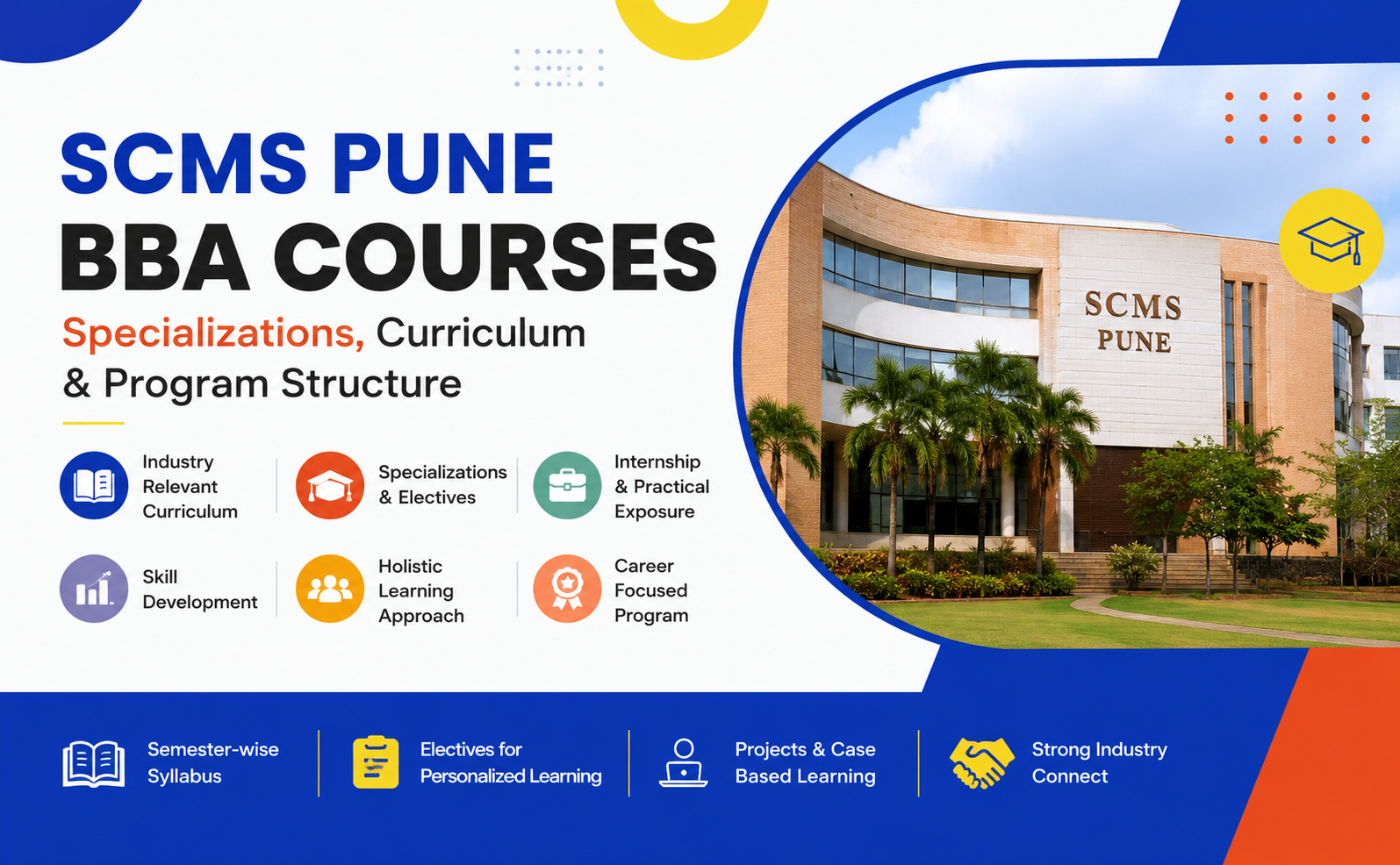
Choosing the right undergraduate management program is one of the most important decisions for students aspiring to build careers in business, entrepreneurship, finance, marketing, analytics, or international management. Understanding the SCMS Pune Courses 2027 in detail helps students evaluate whether the curriculum aligns with their career goals and higher education aspirations.
The BBA program at Symbiosis Centre for Management Studies (SCMS), Pune is designed to provide a balanced blend of theoretical knowledge, practical exposure, industry interaction, and skill development. The curriculum emphasizes academic excellence, experiential learning, internships, project-based education, and multidisciplinary learning.
In this comprehensive guide, we’ll explore SCMS Pune Courses 2027, including BBA specializations, curriculum structure, semester-wise syllabus, electives, internships, credits, evaluation pattern, and frequently asked questions.
SCMS Pune Courses 2027 Overview
The SCMS Pune Courses 2027 curriculum is a four-year undergraduate degree aligned with the National Education Policy (NEP). The program focuses on developing managerial competence, analytical thinking, leadership qualities, communication skills, and global business perspectives.
Highlights
| Particular | Details |
| Course | Bachelor of Business Administration (BBA) |
| Duration | 4 Years (8 Semesters) |
| Institute | Symbiosis Centre for Management Studies (SCMS), Pune |
| Eligibility | 10+2 or equivalent |
| Admission | SET Entrance Test + PI Process |
| Curriculum | Credit-Based Choice System |
| Learning Mode | Classroom + Projects + Internship |
| Industry Exposure | Workshops, Guest Lectures, Live Projects |
| Internship | Mandatory |
Understanding the SCMS Pune Courses 2027 gives students clarity about what they will study throughout their undergraduate journey.
SCMS Pune BBA Specializations
One of the strongest features of SCMS Pune Courses 2027 is the opportunity to pursue specialized areas of management.
Students generally receive a strong management foundation before choosing advanced specialization subjects in later semesters.
Common specialization areas include:
Marketing Management
Students learn:
- Consumer Behaviour
- Brand Management
- Digital Marketing
- Sales Management
- Advertising
- Retail Management
- Marketing Analytics
Finance
Finance specialization focuses on:
- Corporate Finance
- Investment Analysis
- Financial Markets
- Banking
- Risk Management
- Financial Statement Analysis
- Portfolio Management
Human Resource Management
Subjects include:
- Talent Acquisition
- Organizational Behaviour
- Training & Development
- Industrial Relations
- Compensation Management
- Leadership Development
International Business
Students study:
- Global Trade
- Export Management
- International Marketing
- Cross-Cultural Management
- International Economics
- Global Supply Chains
Business Analytics
A rapidly growing specialization covering:
- Data Analysis
- Business Intelligence
- Excel Analytics
- Predictive Analytics
- Data Visualization
- Decision Making
Entrepreneurship
Students interested in startups learn:
- Business Model Development
- Innovation
- Venture Financing
- Startup Strategy
- Family Business
- Business Planning
The availability of electives may vary based on institute guidelines, faculty availability, and academic policies.
SCMS Pune Curriculum Structure
The SCMS Pune Courses 2027 curriculum follows a progressive learning model.
Foundation Courses
Students begin with management fundamentals.
Core subjects include:
- Principles of Management
- Economics
- Business Mathematics
- Financial Accounting
- Business Statistics
- Communication Skills
- Environmental Studies
- Computer Applications
Core Business Courses
As students advance, they study:
- Marketing Management
- Financial Management
- Human Resource Management
- Operations Management
- Organizational Behaviour
- Cost Accounting
- Business Law
- Corporate Governance
- Business Ethics
- Entrepreneurship
Skill Enhancement Courses
The curriculum also develops practical skills through:
- Business Communication
- Leadership Development
- Critical Thinking
- Problem Solving
- Negotiation Skills
- Data Analysis
- Presentation Skills
Value Added Courses
Students are encouraged to build multidisciplinary capabilities through:
- Foreign Languages
- Design Thinking
- Sustainability
- Innovation
- Artificial Intelligence Basics
- Digital Business
This makes SCMS Pune Courses 2027 more industry-oriented.
SCMS Pune Semester-Wise Syllabus
Although subjects may change periodically, a typical semester progression is as follows.
Semester 1
- Principles of Management
- Business Economics
- Business Mathematics
- Financial Accounting
- Communication Skills
- Environmental Studies
Semester 2
- Marketing Management
- Business Statistics
- Organizational Behaviour
- Cost Accounting
- Computer Applications
- Micro Economics
Semester 3
- Financial Management
- Human Resource Management
- Operations Management
- Business Law
- Entrepreneurship
- Research Methodology
Semester 4
- Consumer Behaviour
- Business Analytics
- Macroeconomics
- Supply Chain Management
- Corporate Finance
- Business Communication
Semester 5
Students usually begin advanced specialization papers along with:
- Strategic Management
- Project Management
- Electives
- Research Projects
Semester 6
Includes:
- Advanced Electives
- Industry Projects
- Case Studies
- Skill Development Courses
Semester 7
Students continue specialization subjects with:
- Major Project
- Internship
- Business Simulation
- Leadership Courses
Semester 8
The final semester generally focuses on:
- Dissertation
- Strategic Decision Making
- Industry Project
- Advanced Electives
- Corporate Exposure
The exact SCMS Pune semester-wise syllabus may change according to university updates.
Electives Available in SCMS Pune
An important advantage of SCMS Pune Courses 2027 is flexibility through elective courses.
Popular electives include:
Marketing Electives
- Digital Marketing
- Retail Marketing
- Services Marketing
- Advertising
- Brand Management
Finance Electives
- Investment Banking
- Financial Derivatives
- Security Analysis
- Wealth Management
- Banking Operations
HR Electives
- Performance Management
- Leadership
- Organizational Change
- Talent Analytics
Analytics Electives
- Business Intelligence
- Data Visualization
- Predictive Analytics
- Excel for Managers
Entrepreneurship Electives
- Startup Financing
- Innovation Management
- Family Business
- Social Entrepreneurship
Electives help students customize the SCMS Pune Courses 2027 according to their career aspirations.
Internship Opportunities
Internships form an integral part of the curriculum.
Students gain:
- Corporate Exposure
- Real Business Projects
- Industry Mentorship
- Teamwork Experience
- Professional Networking
Internships help bridge classroom learning with practical application.
Benefits include:
- Resume Building
- Placement Readiness
- Skill Development
- Industry Knowledge
Credit System
The SCMS Pune Courses 2027 follow a credit-based system.
Each course carries a defined number of credits based on:
- Classroom Learning
- Tutorials
- Practical Sessions
- Projects
- Internships
- Independent Learning
Students are required to successfully complete the prescribed credits to earn the BBA degree.
The exact credit requirements may vary depending on curriculum revisions.
Major and Minor Courses
Modern undergraduate education encourages interdisciplinary learning.
Students may have opportunities to pursue:
Major
The primary area of specialization.
Examples:
- Marketing
- Finance
- HR
- International Business
Minor
Students may choose complementary learning areas such as:
- Economics
- Analytics
- Entrepreneurship
- Psychology
- Liberal Arts
This multidisciplinary approach strengthens employability.
Evaluation Pattern
The SCMS Pune Courses 2027 use continuous assessment rather than relying solely on final examinations.
Evaluation components often include:
Internal Assessment
- Class Participation
- Assignments
- Presentations
- Quizzes
- Group Discussions
- Case Studies
Mid-Semester Examination
Students appear for internal written examinations during each semester.
End Semester Examination
Final written examinations evaluate conceptual understanding.
Projects
Students work on:
- Research Projects
- Business Analysis
- Market Surveys
- Live Industry Assignments
Internship Evaluation
Performance during internships is assessed through:
- Reports
- Viva
- Employer Feedback
- Faculty Evaluation
This holistic assessment ensures overall personality development.
Practical Learning Approach
The SCMS Pune Courses 2027 emphasize experiential learning.
Students participate in:
- Business Simulations
- Live Projects
- Industry Visits
- Management Festivals
- Corporate Competitions
- Case Study Competitions
- Startup Events
- Workshops
- Guest Lectures
These activities improve managerial skills beyond textbooks.
Skills Developed Through SCMS Pune Courses 2027
Graduates develop competencies such as:
- Leadership
- Decision Making
- Strategic Thinking
- Communication
- Teamwork
- Problem Solving
- Data Analysis
- Financial Literacy
- Business Planning
- Presentation Skills
- Negotiation
- Innovation
- Entrepreneurship
These skills are highly valued by employers.
Career Opportunities After Completing SCMS Pune Courses 2027
Graduates can pursue careers in:
- Marketing
- Banking
- Finance
- Consulting
- Human Resources
- Business Development
- Operations
- Digital Marketing
- Analytics
- Entrepreneurship
- Retail
- Supply Chain Management
Many students also pursue higher education such as:
- MBA
- PGDM
- International Master’s Programs
- Professional Certifications
Why Understanding SCMS Pune Courses 2027 Matters
Knowing the structure of SCMS Pune Courses 2027 helps students:
- Plan their academic journey
- Select suitable electives
- Prepare for internships
- Build specialization expertise
- Develop career-oriented skills
- Make informed admission decisions
The curriculum combines management education with practical industry exposure, making graduates more competitive in today’s business environment.
How Tarkashastra Helps You Get Into SCMS Pune
Getting admission to SCMS Pune requires excellent preparation for the Symbiosis Entrance Test (SET) and the Personal Interaction (PI) process.
At Tarkashastra, students receive:
- Comprehensive SET preparation
- Concept-based classroom coaching
- Mock Tests
- Previous Year Question Practice
- Personal Interview Preparation
- Mentorship from experienced faculty
- Performance Analysis
- Doubt Solving Sessions
- Study Material designed for BBA entrance exams
Whether your goal is SCMS Pune or another top BBA college, structured preparation can significantly improve your chances of success.
Conclusion
The SCMS Pune Courses 2027 offer a well-balanced undergraduate management education with strong academic foundations, industry exposure, internships, specialization options, electives, and multidisciplinary learning. The curriculum is designed to develop future business leaders equipped with analytical, managerial, and entrepreneurial skills.
Students preparing for admission should not only understand the admission process but also evaluate the SCMS Pune Courses 2027 curriculum carefully. Knowing the program structure, semester-wise subjects, specialization options, internships, credits, and evaluation methods will help you make an informed decision and prepare effectively for a successful management career.
Frequently Asked Questions (FAQs)
1. What BBA specializations are offered in SCMS Pune?
SCMS Pune generally offers specialization areas such as Marketing, Finance, Human Resource Management, International Business, Business Analytics, and Entrepreneurship, subject to institutional policies.
2. How is the SCMS Pune curriculum structured?
The curriculum follows a credit-based semester system with foundation courses, core management subjects, specialization papers, electives, projects, internships, and skill enhancement courses.
3. Are there semester-wise subjects?
Yes. Each semester includes a structured combination of core subjects, practical learning, projects, and advanced electives in later semesters.
4. What electives are available?
Electives typically include Digital Marketing, Business Analytics, Investment Banking, Brand Management, Leadership, Entrepreneurship, Data Visualization, and more.
5. Are internships part of the program?
Yes. Internships are an important component of the curriculum and provide students with industry exposure and practical learning.
6. How many credits are required?
Students must complete the credit requirements prescribed under the university’s curriculum. The exact number may vary with curriculum revisions.
7. Are there major and minor courses?
The curriculum supports interdisciplinary learning, where students may pursue major and minor areas depending on academic regulations.
8. How is the course evaluated?
Evaluation includes internal assessments, assignments, presentations, projects, quizzes, internships, and end-semester examinations.
9. What is the duration of the BBA program?
The BBA program is a four-year undergraduate degree consisting of eight semesters.
10. Are students allowed to choose their courses?
Students typically have opportunities to select electives and specialization subjects according to institutional guidelines and course availability.